Conflict and repair
Conflict is any friction between partners, and it does not have to be a fight. It can be a tone of voice, a misunderstood moment, or a familiar difference coming up again.
Repair is how the two of you come back to each other afterwards, including how long it takes, what it looks like, and what each of you needs before it feels finished. That last part varies between couples more than almost anything else, and it is rarely discussed.
Matching styles
Imagine you both prefer to step back, cool down, and return to a disagreement later. That is a matched conflict style, and it can serve you well.
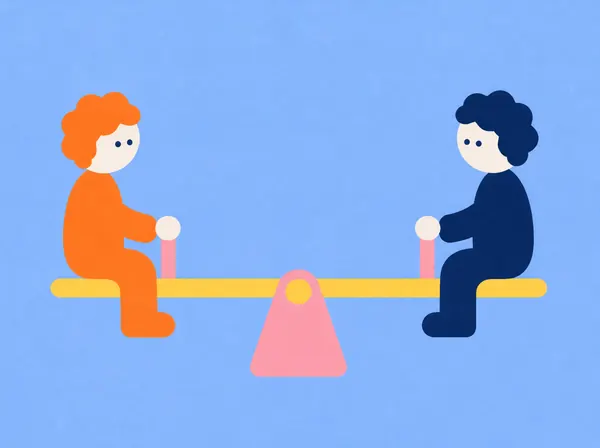
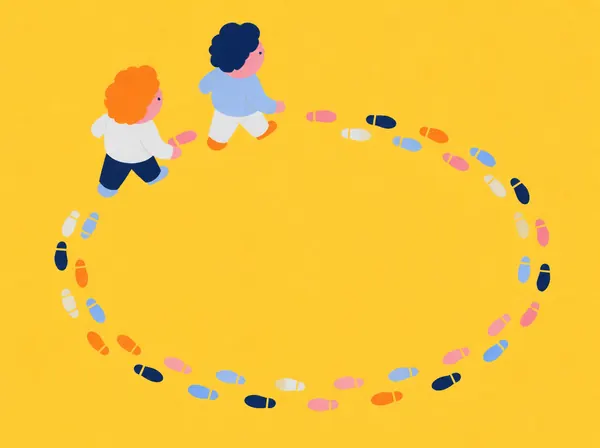
If one of you needs the disagreement acknowledged out loud before it feels repaired, and the other sees an ordinary conversation as the sign that it is over, you may find yourselves in the same place again and again. Meaning, the difficulty comes from what each of you needs for it to feel finished, rather than from how you disagree.
What repair looks like
Repair does not always require a long conversation. Sometimes it is one specific acknowledgment, sometimes it is sitting close together without saying anything, and sometimes it is naming the specific thing that hurt rather than offering a general apology.
Research on repair has found that whether a repair attempt works depends less on how well it is made and more on whether the other person is in a place to receive it.
What repair changes
A good repair does not undo what happened, and it is not meant to. Rather, it changes what that moment means in the story the two of you tell about your relationship.
Dr. Sue Johnson writes in Hold Me Tight that, “Injuries may be forgiven, but they never disappear. Instead, in the best outcome, they become integrated into couples’ attachment stories as demonstrations of renewal and connection.”
Where to look in your results
Your results look at both of these separately. Conflict Style describes how each of you responds to friction in the moment, and Repairing describes what it takes for things to feel settled afterwards.
Try this together
Read them together and notice whether the two of you line up or differ. If you differ, that is a helpful conversation to have, and it can be a specific one about what feeling finished looks like for each of you.
The point is that neuroses don’t have to ruin a marriage. If you can accommodate each other’s “crazy” side and handle it with caring, affection, and respect, your marriage can thrive.
John Gottman and Nan Silver, The Seven Principles for Making Marriage Work